
Blog
Is a Basement Remodel Worth It in Pittsburgh? Here Is How to Decide
If you have an unfinished basement in Pittsburgh, you are sitting on anywhere from 500 to 1,500 square feet of space that is doing nothing for you. Most people know that finishing a basement adds living space, but the real question is whether it makes sense for your situation — and what to watch out for if you move forward.
Why Basements in Pittsburgh Are Different
Pittsburgh sits in hilly terrain with a lot of older construction. That means basements here come with a few challenges you will not find in newer builds or flatter parts of the country:
Moisture. This is the number one issue. Between our clay-heavy soil, the hillside grades most homes sit on, and 38-plus inches of annual rainfall, water management is not optional — it is the entire foundation of a successful basement remodel. If you have any history of water intrusion, that needs to be solved before a single stud goes up.
Low ceiling heights. A lot of mid-century homes in our area have basements with 7-foot ceilings or less. That does not automatically disqualify a finish, but it does affect what is realistic. There are ways to work with it — thinner ceiling options, strategic lighting, and avoiding bulky soffits around ductwork — but it needs to be part of the plan from the start.
Mechanicals in the way. Furnaces, water heaters, electrical panels, and ductwork all live in the basement. A good design works around these without boxing everything in and making future maintenance a nightmare.
What a Finished Basement Actually Gets You
The obvious answer is more living space, but it is worth thinking about what kind of space you actually need.
Family Room or Entertainment Space
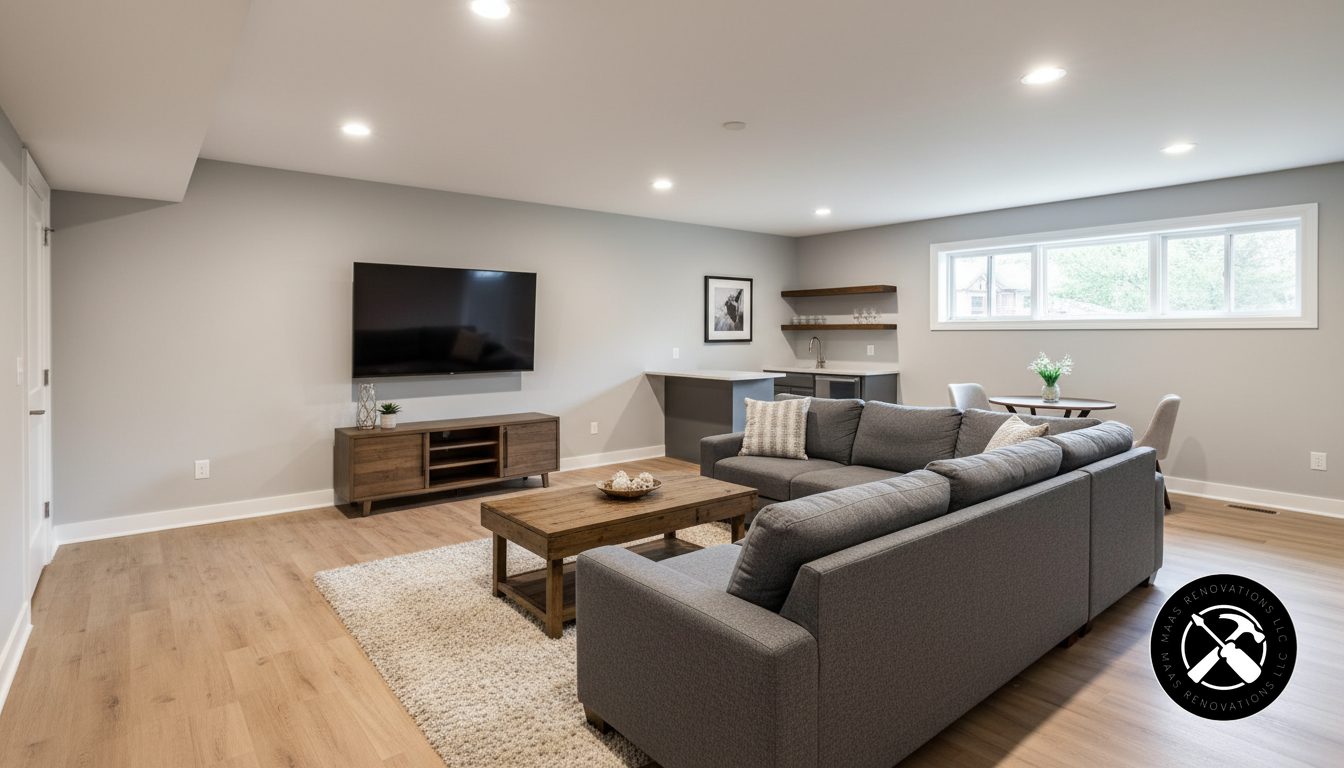
This is the most common use. A comfortable area with seating, a TV, maybe a small bar or kitchenette. It gets the kids and their noise out of the main living area and gives you a dedicated spot for movie nights, game days, or just having people over without the whole house being in play.
Home Office
Remote work is not going anywhere, and a basement office gives you separation from the rest of the house that a spare bedroom does not. Proper lighting, climate control, and sound isolation make a basement a surprisingly good workspace.
Guest Suite
A bedroom and bathroom in the basement turns your home into a place that can comfortably host overnight guests without anyone giving up their own room. Just be aware that building code requires egress windows for any basement bedroom — that means a window large enough for an adult to climb through in an emergency.
Gym or Workout Space
Basements stay cool year-round, the concrete slab handles heavy equipment without vibration issues, and you do not have to worry about noise bothering anyone above. Rubber flooring over the slab is all you need for the floor.
The Moisture Question
We cannot say this enough — moisture management has to come first. Here is what a proper approach looks like:
- Exterior grading that directs water away from the foundation
- Gutters and downspouts that discharge at least 4 to 6 feet from the house
- Interior drainage if needed — a French drain system along the footing tied to a sump pump
- Vapor barrier or waterproof membrane on the walls before framing
- A dehumidifier sized for the space to handle ambient moisture year-round
Skipping any of these steps to save money is how you end up tearing out drywall two years later. We have seen it more times than we can count.
Framing, Insulation, and Walls
Once moisture is handled, the framing goes up. In most basement remodels, you are building 2x4 walls against the foundation with rigid foam or spray foam insulation between the studs and the concrete. This serves two purposes — thermal insulation and a moisture break.
Drywall goes over that just like any other room in the house. Some homeowners opt for moisture-resistant drywall in basements as an extra precaution, which is a reasonable upgrade.
Flooring That Works Below Grade
Not every flooring material is a good idea in a basement. The concrete slab can transmit moisture even when everything else is done right, so you need flooring that can handle it.
Luxury vinyl plank (LVP) is the go-to choice for most basement remodels right now. It is waterproof, durable, comfortable underfoot, and comes in styles that look like hardwood. It installs as a floating floor over the slab with a built-in vapor barrier underlayment.
Tile works well in bathrooms, laundry areas, or anywhere you expect water exposure. It is bombproof but cold underfoot unless you add radiant heat.
Carpet can work in basement living areas if moisture is truly under control, but it is the riskiest choice. If it ever gets wet, you are dealing with mold and replacement.
Engineered hardwood is an option in dry basements but is generally not recommended below grade. Solid hardwood should never go in a basement.
Electrical and Lighting
Basements tend to be dark, so lighting design matters more here than anywhere else in the house. Recessed LED lights are the standard approach — they do not eat into already-limited ceiling height and provide even, bright light across the space.
Plan for plenty of outlets, including dedicated circuits for any high-draw items like a mini fridge, microwave, or space heater. If you are adding a bathroom, that means GFCI outlets near water sources per code.
Getting Started
A basement remodel is one of the more complex renovation projects because it touches on structural, mechanical, plumbing, and electrical work all in one space. The planning phase is where you avoid expensive mistakes — figuring out the moisture strategy, the layout around existing mechanicals, and what permits your municipality requires.
At Maas Renovations, we have finished basements across the Pittsburgh area in homes ranging from 1940s brick colonials to modern construction. Every basement is different, and we tailor the approach to what your specific space needs. If you are thinking about finishing your basement, reach out and we will come take a look.


Contact
Contact Maas Renovations Today!
Have questions or ready to start your renovation project? We’re here to help! Fill out the form and a member of our team will get back to you as soon as possible. At Maas Renovations, we're committed to providing personalized service and expert advice tailored to your unique needs. Let’s bring your vision to life—contact us today!


Since 2018 Maas Renovations has been striving to meet customer needs. Thank you for your support!
Quick Link
Connect With Us

© 2026 Maas Renovations | Privacy Policy | Terms of Service